Imagine you’re on a flight that hits hard turbulence, and the pilot comes over the intercom: “This turbulence is really scary, and I’m not sure what’s going to happen.” The turbulence hasn’t changed. Everything else has. Panic moves through the cabin in seconds.
We don’t expect pilots to pretend the sky is smooth. We expect them to name the reality and stay steady enough to fly through it. A leader’s job in a hard moment is the same. A panicked leader makes a panicked team, and it happens faster than most leaders realize.

Your team syncs to your state
Emotions move through groups. In a well-known study, Sigal Barsade showed that the mood one person carries into a group spreads to the others and changes how the group works, with negative emotions traveling especially fast and raising conflict. And no one in the room is watched more closely than the person in charge. Your energy, your tone, the way you react to bad news, all of it gets read and absorbed, often without a word.
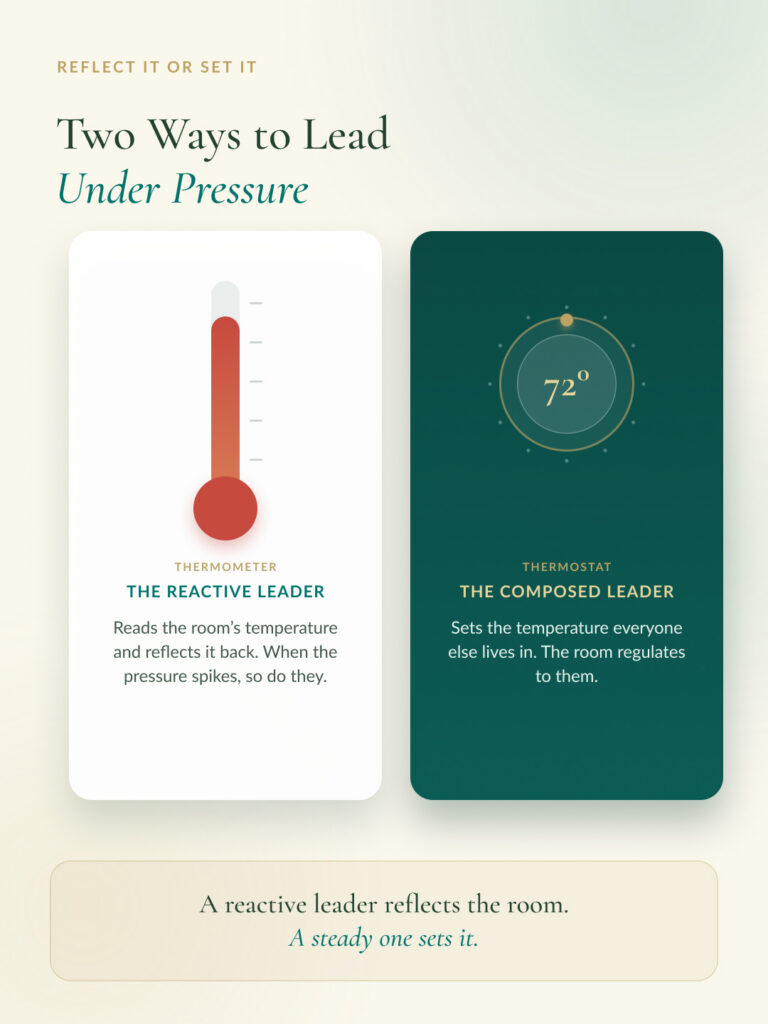
When a leader gets visibly reactive or anxious, that state ripples outward. People narrow their thinking. Curiosity gives way to certainty, and collaboration gives way to self-protection. Decision quality drops, because the whole group has shifted into threat mode. When a leader stays grounded, the opposite happens: their steadiness gives everyone else enough room to stay connected to their best thinking.
This is why one of a leader’s most important jobs is not just making good decisions, but regulating the environment where everyone else has to make theirs.
Calm gets misread as cold
Here is where it goes wrong. I have heard employees call a calm CEO disconnected, unemotional, even cold. Then I sit with that same person behind closed doors and watch them carry an enormous weight. They think about hard calls long after the meeting ends. Layoffs cost them sleep. They replay conversations they wish had gone differently.
My own research bears this out. When I interviewed Fortune 1,000 CEOs about what drains them, 70 percent named the emotional labor of the role: the requirement to always appear composed, regardless of what they actually feel. Nearly half pointed to the constant work of holding their own reactions in check for the sake of the organization. Composure is not the absence of feeling. It is the discipline of feeling it fully and staying grounded anyway.
That is different from pretending. False optimism erodes trust as fast as panic does. The strongest leaders tell the truth about a hard situation and still signal that the team has what it takes to get through it. They name the reality without handing everyone their fear.
What this actually asks of you
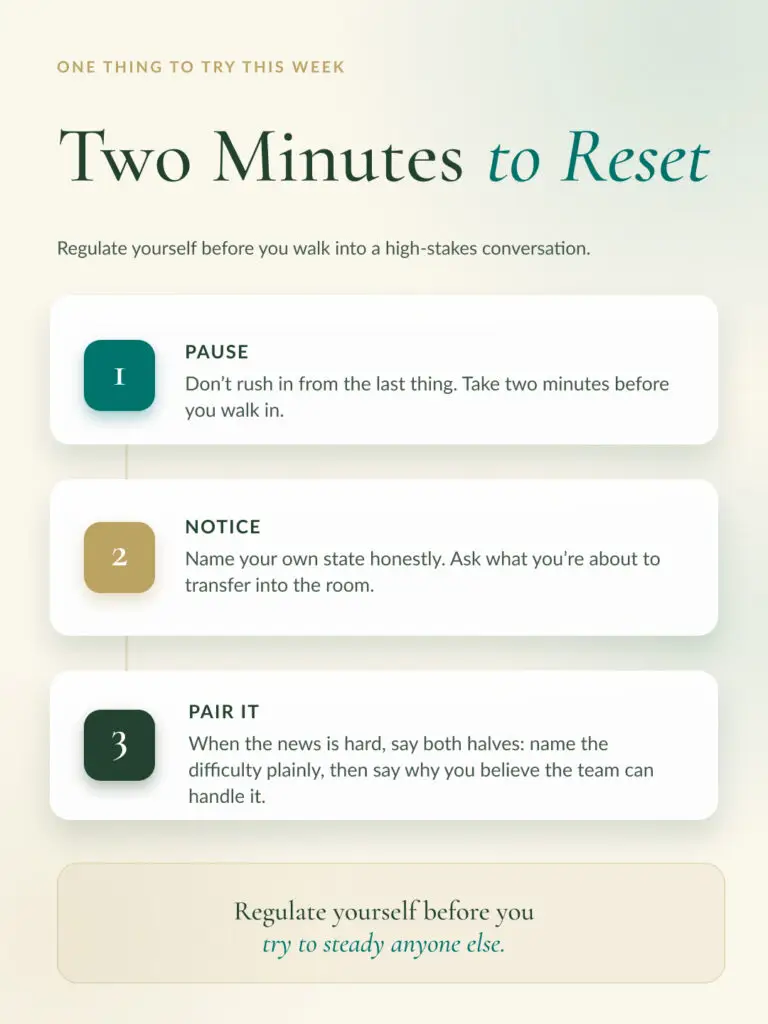
Steadiness under pressure is a skill, and like any skill, it is built. It starts with regulating yourself before you try to steady anyone else, because your nervous system is part of the room whether you plan for it or not.
So this week, try this. Before you walk into a high-stakes conversation, take two minutes to reset instead of rushing in from the last thing. Notice your own state honestly, and ask what you are about to transfer into the room. When you have hard news to deliver, pair it with steadiness on purpose: name the difficulty plainly, then say why you believe the team can handle it. Both halves matter.
We may have misunderstood what strength looks like. Sometimes it is the quiet discipline of staying grounded when the stakes are highest, because you understand that your emotional state is never only yours. It shapes every conversation, every decision, and every person who looks to you for direction.
When you are responsible for the whole plane, your composure stops being personal. It becomes an act of service.
— Jamie