What if the problem isn’t just who’s on your leadership team, but how your leadership team works together?
Two recent publications caught my attention this week. The first was an HR Dive article highlighting findings from Boston Consulting Group’s latest CEO Insomnia Index. The second was the BCG research itself. Together, they paint a concerning picture of what is happening at the very top of organizations.
Nearly 60% of CEOs are planning to replace at least one member of their senior leadership team within the next six months. Only 63% are confident their teams can execute their vision over the next two to four quarters. And 34% have considered stepping down themselves within the past six months.
Those numbers deserve our attention. But what interested me most wasn’t the potential turnover. It was what CEOs said about why they were disappointed in their teams.
Some pointed to capability gaps. Others described competing agendas and executives who struggled to work effectively with their peers without the CEO intervening.
That last finding really stood out to me.
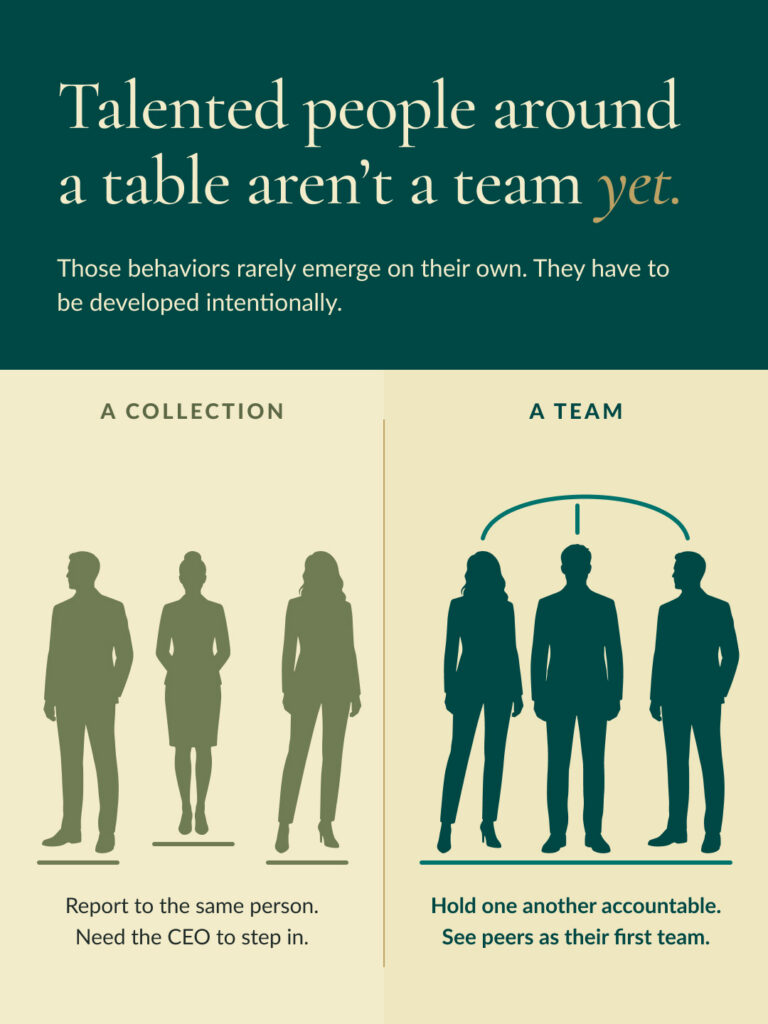
When a CEO has to continually hold their executives accountable to one another, do they actually have a leadership team, or do they have a collection of highly capable individuals who happen to report to the same person?
There is an important distinction.
We have spent decades investing in individual executive development. We assess leaders, coach them, build their capabilities, and evaluate their performance. All of that matters. But being an exceptional functional leader does not automatically make someone an exceptional enterprise leader.
The capabilities required to lead a function are not identical to those required to lead an enterprise. At the enterprise level, leaders must be willing to make decisions that benefit the whole organization, even when those decisions create challenges for their own function. They must hold one another accountable, engage in candid conversations, share responsibility for outcomes, and view their peers as their first team.
And those behaviors rarely emerge simply because we put talented people around a table.
They have to be developed intentionally.
When the CEO Becomes the Team’s Accountability System
What makes this research particularly interesting is the relationship between the pressure CEOs are experiencing and the teams surrounding them.
BCG found that 60% of CEOs believe near-term pressures consume a disproportionate share of their time. More than half feel pressure to prioritize immediate performance over longer-term investments.
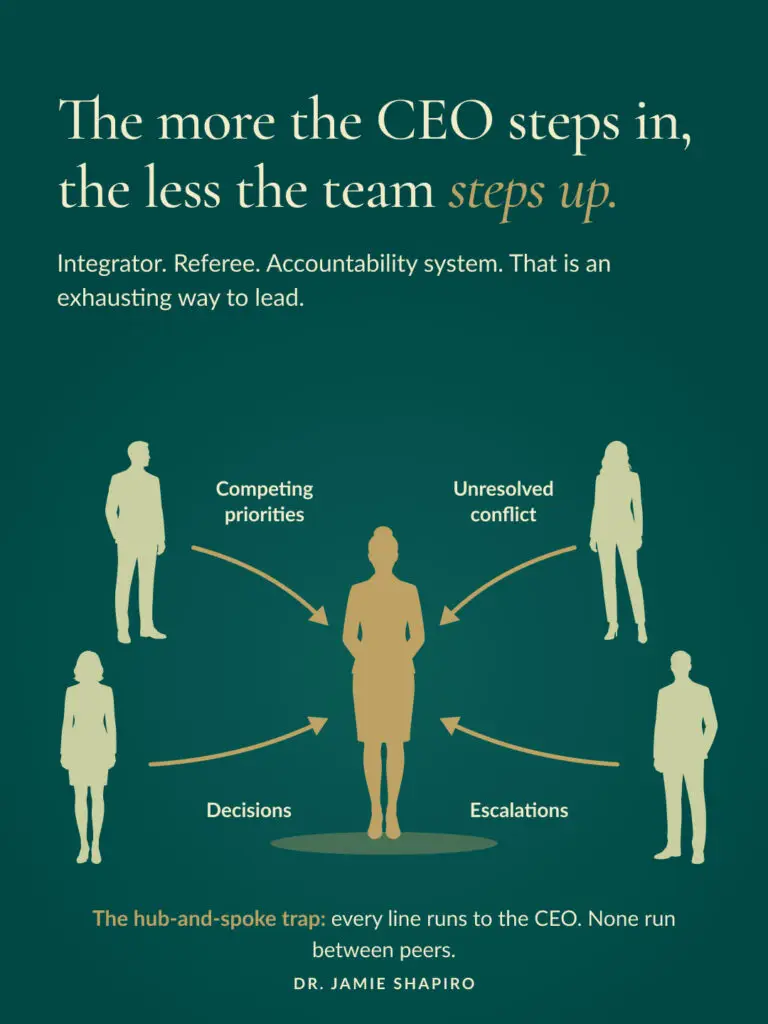
Now consider what happens when the executive team isn’t operating cohesively. Instead of distributing leadership across the enterprise, the CEO becomes the point of escalation for competing priorities, unresolved conflict, and decisions that should be made collectively.
The CEO becomes the integrator, the referee, and often the accountability mechanism.
That is an exhausting way to lead. It also creates a system in which the organization becomes increasingly dependent on one individual.
And here’s the paradox: The more the CEO steps in to compensate for a disconnected team, the less opportunity that team has to develop the collective accountability it needs.
Over time, that dynamic can become self-reinforcing.
There is also a human cost to this dynamic that we don’t talk about nearly enough. BCG found that nearly half of CEOs frequently postpone activities that support their physical and mental well-being. We often approach executive well-being as an individual responsibility, encouraging leaders to sleep more, exercise, set boundaries, and build resilience. Those things matter enormously. But what if part of what is depleting our CEOs isn’t simply the demands of the role, but the leadership systems they are operating within?
My research on vitality suggests that the energy leaders bring to their work is multidimensional, encompassing physical, psychological, emotional, and spiritual vitality. When a CEO spends their days navigating unnecessary conflict, compensating for a lack of accountability, and carrying decisions that should be shared across the team, the consequences may extend far beyond organizational performance. We need to consider not only whether our leadership teams are delivering results, but whether the way they operate is sustaining or depleting the people within them.
The Trust Gap Is Bigger Than the C-Suite Thinks
The research also revealed another striking disconnect.
While 87% of CEOs expressed confidence that employees trust their leadership, only 46% of employees expressed confidence in their CEO’s leadership, judgment, and vision.
That is an enormous perception gap.
It becomes even more consequential as organizations navigate AI transformation, workforce uncertainty, and changing expectations about work.
To me, these findings are connected. The C-suite is the leadership system through which strategy becomes reality and culture is experienced across an organization. When senior executives are misaligned, communication becomes fragmented, priorities compete, and employees can receive very different messages depending on which leader they report to.
A CEO can have the clearest vision in the world, but if the executive team cannot translate that vision into a consistent organizational experience, trust will suffer.
This is why I believe we have to stop treating executive team effectiveness as a secondary leadership development initiative.
It is a fundamental business capability.
Before Changing the People, Examine the System
There are absolutely times when an executive is no longer the right person for a role. Business needs evolve, and leaders do not always have the capabilities or willingness to evolve with them.
But before concluding that the solution is replacing people, I would encourage CEOs to ask a few different questions:
- Have we built a true enterprise leadership team, or are we rewarding individual functional success?
- Do my executives hold one another accountable, or does accountability always flow through me?
- Can this team engage in healthy conflict and make difficult decisions without my intervention?
- Have we created the clarity, trust, and shared purpose necessary for collective performance?
- Am I unintentionally reinforcing the very dependence on me that I find so exhausting?
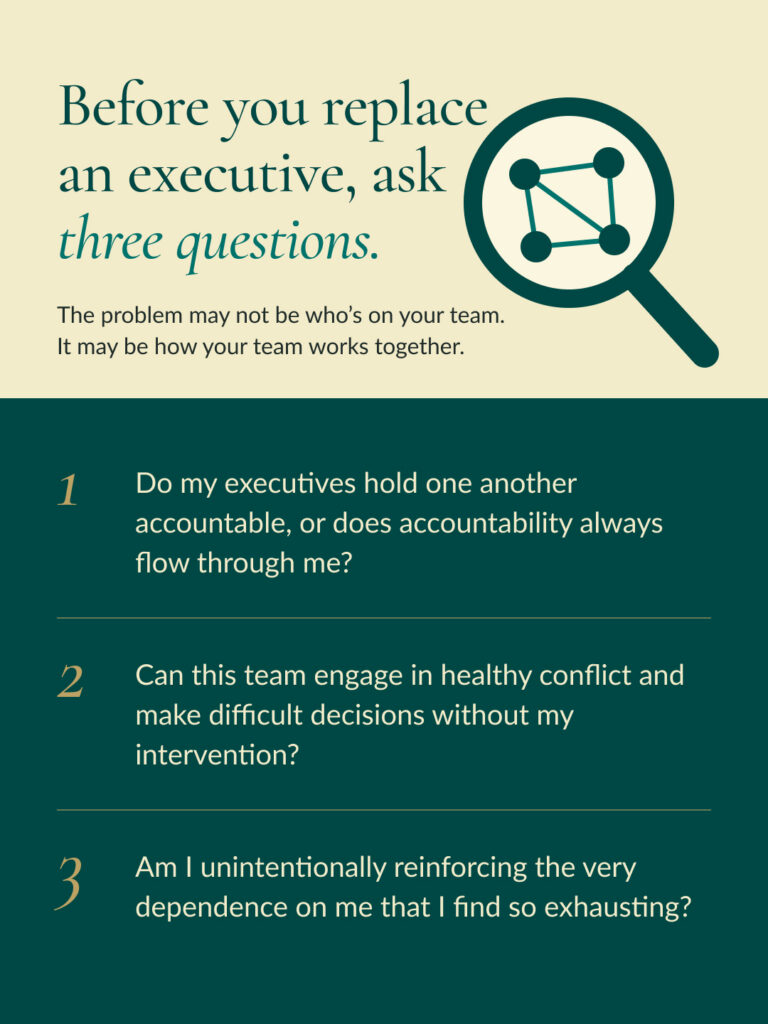
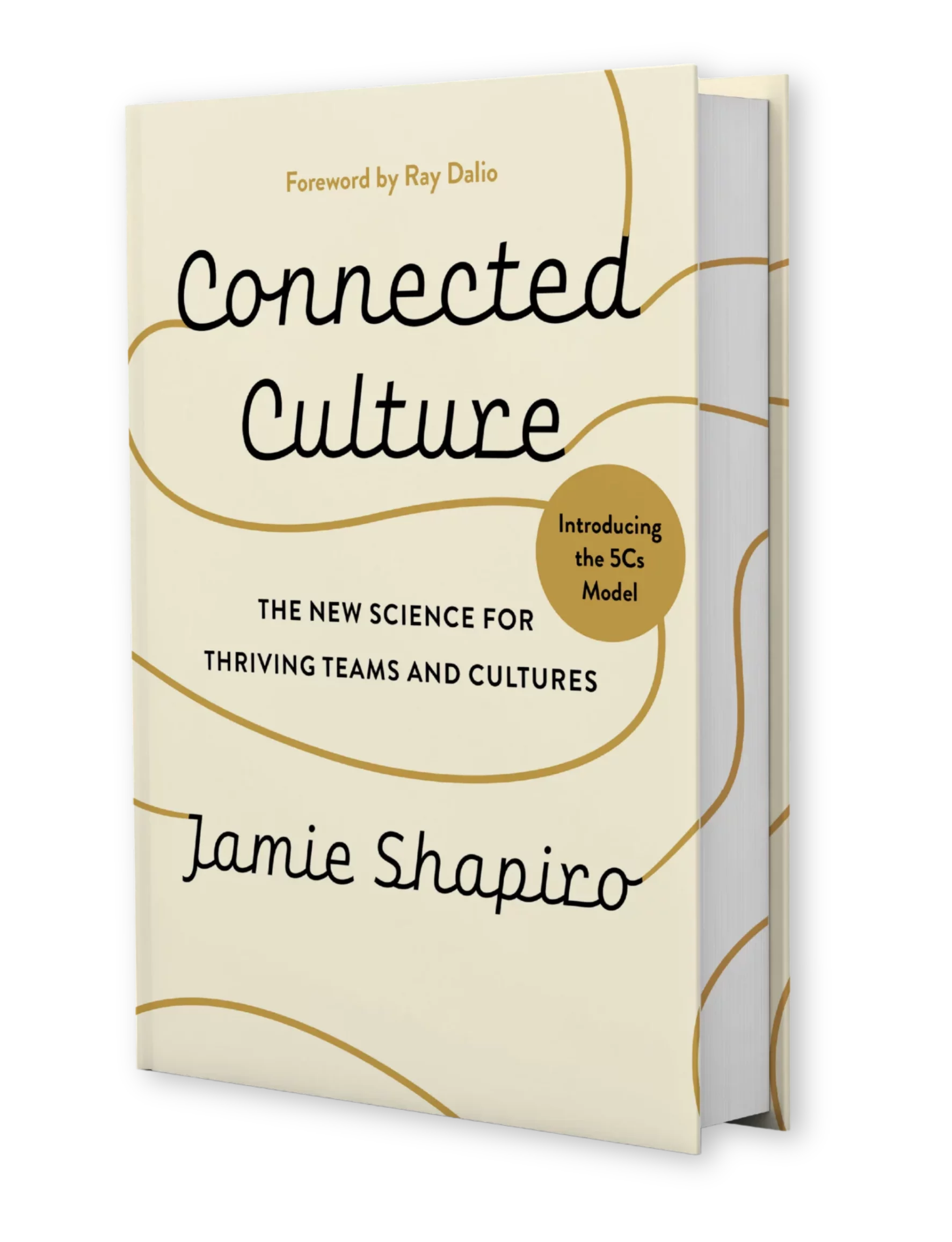
These questions sit at the heart of why I developed the 5Cs Model of Connected Culture Connection, Candid Communication, Clarity, Collaboration, and Contribution are not simply cultural aspirations. They are measurable dimensions of how effectively people work together. When these elements are strong, executive teams are better positioned to build trust, navigate difficult conversations, establish shared accountability, and make decisions that serve the entire enterprise.
The 5Cs give leaders a way to move beyond assumptions about team effectiveness and examine the conditions that enable collective performance. Because before we can improve how a team operates, we need to understand what is helping it thrive and what may be holding it back.
Strengthening these dimensions isn’t about lowering expectations for executive performance. Quite the opposite. It is about raising expectations for what it means to be part of the C-suite.
Because the greatest value of an executive team is not simply the combined expertise of the individuals sitting around the table. It is what those individuals can accomplish together that none could accomplish alone.
And perhaps that is where we should be directing more of our attention.
Not just toward developing better executives, but toward building better executive teams.
The goal isn’t a C-suite that needs the CEO to make it work. It’s a C-suite that makes the entire enterprise work better, while strengthening rather than depleting the people who lead it.
Is Your Executive Team Operating at Its Full Potential?
At Connected EC, we partner with CEOs and executive teams to strengthen the leadership relationships, culture, and collective capabilities that drive enterprise performance. Through our research-backed 5Cs Model and executive team coaching, we help leaders build teams that work better together.
Learn more about how we can support your leadership team at https://connectedec.com