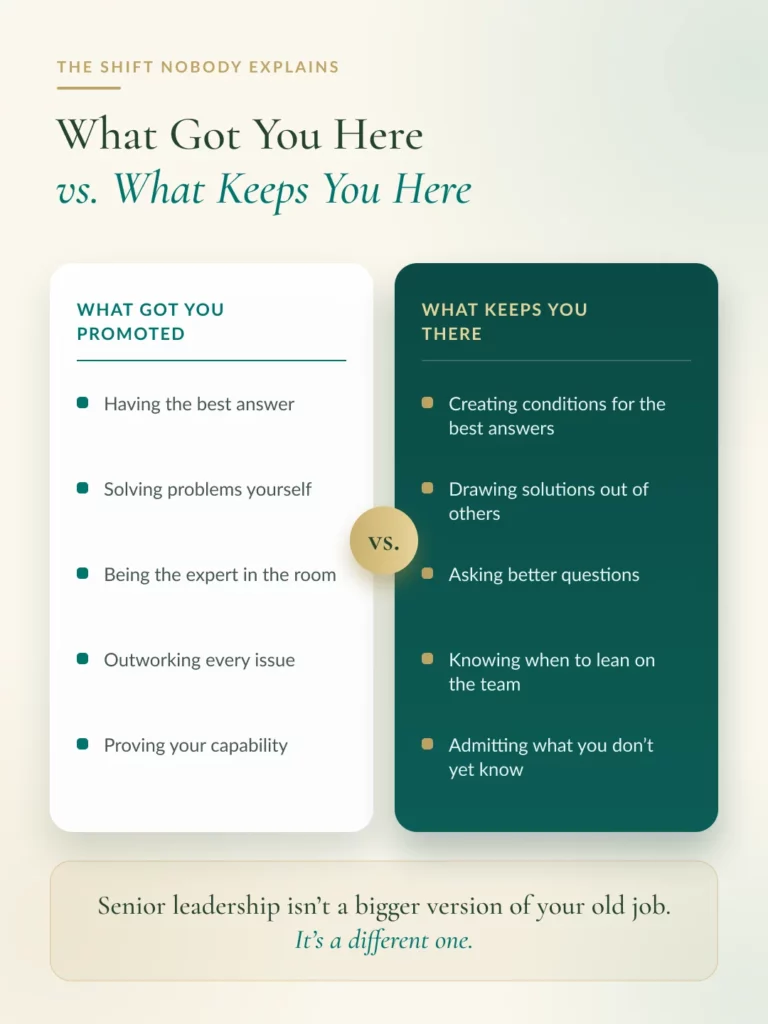
When you got promoted, you believed the job was to have the answers. It made sense. For your whole career, that is what got you here: solving the hard problem, delivering the result, knowing more than anyone else in the room.
Then the job quietly changed, and the habit that built your career started working against you.
Senior leadership is a different job. The problems are more tangled, the decisions carry more weight, and the hardest questions reach past any one person’s expertise. Success stops being about having the best answer. It becomes about creating the conditions for the best answers to surface across the team.
The smarter you are, the harder this is to let go of
The people who struggle most with this shift are often the sharpest ones. Their whole identity is built on being the person with the answer, so when the answer stops being enough, the ground moves. The confidence that carried them this far starts to slip.
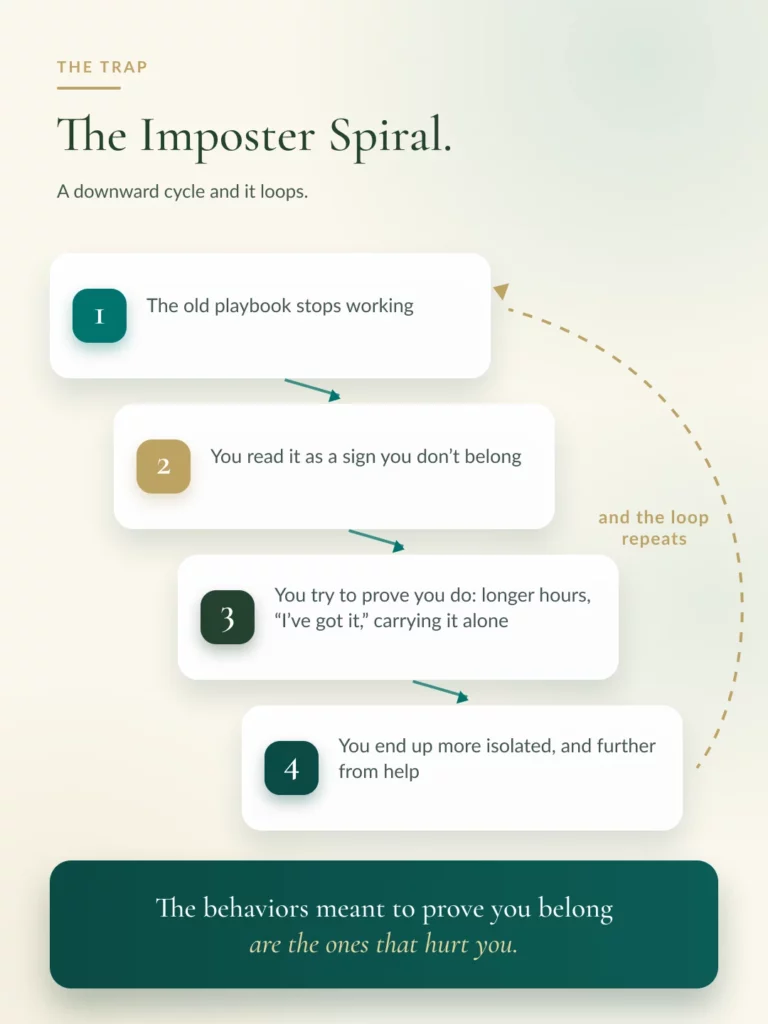
It is easy to read that moment the wrong way, as a sign the promotion was a mistake rather than a normal part of growing into a bigger role. That is usually when imposter syndrome takes hold. And the instinct it produces, to prove you belong, is exactly what makes the job harder.
Instead of saying “I could use another perspective,” you say “I’ve got it.” Instead of asking for coaching, you work longer hours and carry it alone. Each move is meant to signal strength. Together, they leave you isolated, and further from the help that would actually get you through.
What strong leaders actually do
In more than two decades coaching senior executives, I have never once thought less of a leader for asking for help. The strongest ones are the most willing to say what they do not yet know.
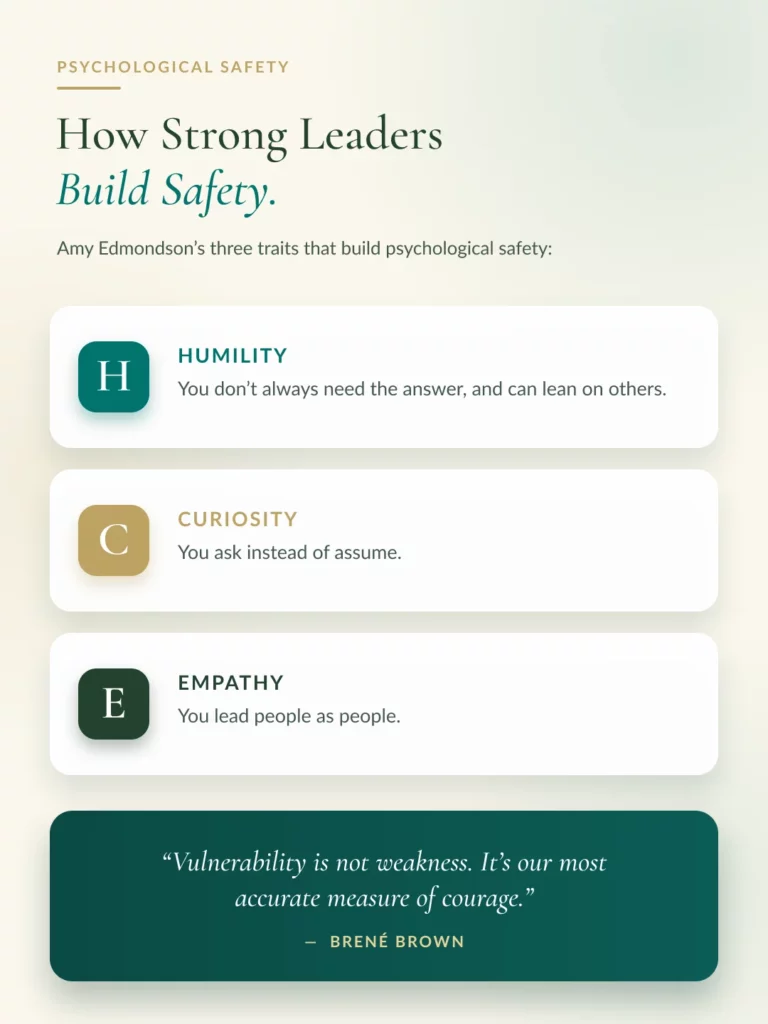
The research points the same way. Amy Edmondson found that leaders build psychological safety through humility, curiosity, and empathy. Humility here is not self-doubt. It is understanding that you do not always need to have the answer, and that you can lean on the people around you when you don’t. The same holds for trust. In the version of the Trust Equation I use with leaders, vulnerability sits in the numerator, building trust rather than weakening it. As Brené Brown puts it, vulnerability is not weakness; it is our most accurate measure of courage.
What it looks like in the room
Imagine yourself in a meeting where everyone expects you to have the answer, and you don’t. The safe move is to nod along and protect the image of competence.
But your team reads that certainty as the standard. If you never admit confusion or ask the obvious question, the people around you learn they can’t either. The room fills with people performing confidence instead of naming what they actually see. The very thing meant to protect your credibility trains your whole team out of honesty.
One thing to try this week
Take one problem you would normally solve alone and bring it to the team. If it is a real gap in your experience, name it and ask who has done this before. If it is a decision you could make alone but don’t have to, invite challenge before you land it. AI is a useful place to start, since it is the one area where almost every executive is currently a beginner. Saying “I haven’t figured this out yet” out loud, right there, costs you nothing and shows your team what it looks like.
No one reaches senior leadership alone, and no one navigates this next stretch alone either. The leaders who thrive are not the ones who convince everyone they have all the answers. They are the ones with the nerve to say “I don’t know yet,” and the sense to build a team that makes them better.
— Jamie