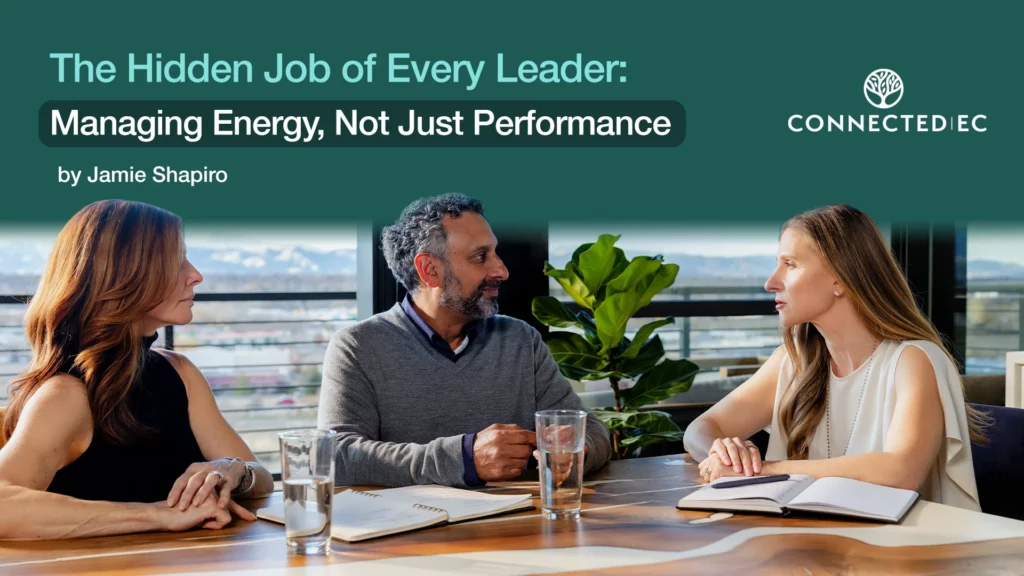
Most leaders are taught to believe their job is to drive performance. And to be fair, that’s how they’re measured. Output, results, execution.
But performance is not the starting point. It’s the outcome. What sits underneath it is energy. And most leaders have never been taught to think of themselves as energy generators.
After years of coaching executive teams, I’ve seen this pattern repeat: strong leaders who deliver results and, at their best, elevate the energy and capacity of the people around them. Over time, that’s what makes performance not just possible, but sustainable.
The Leaders Who Build the Strongest Cultures Share One Thing
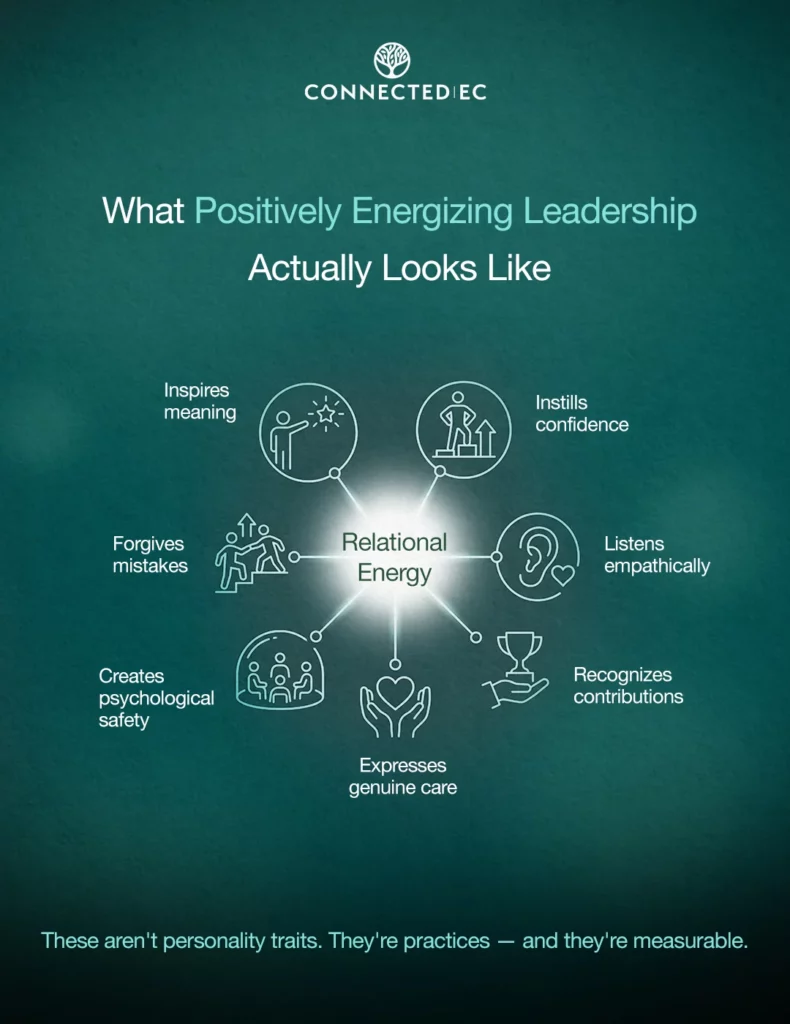
Emerging research on what’s called positively energizing leadership gives language to something I’ve observed for years. The most effective leaders don’t separate themselves through vision or strategy alone. They do it through the relational quality of their everyday interactions.
Leaders who express genuine care, instill confidence, listen empathically, and create psychological safety are measurably linked to higher employee engagement and well-being, beyond what other well-studied leadership models can explain on their own.
But here’s what strikes me most from my own work with executive teams: the leaders who build the strongest cultures aren’t always the most charismatic in the room. They’re the ones who leave people feeling more capable after a conversation than before it.
That’s not a personality trait. It’s a practice.
What You Bring Into the Room Matters More Than What You Say
Most leaders focus on what they say; the message, the strategy, the ask. What they overlook is what they bring into the room before they even speak.
Small behaviors shape how people feel. Do they feel energized or drained? Things like recognizing contributions, sharing real opportunities, forgiving mistakes instead of keeping score, and showing genuine positivity all make a difference.
These aren’t soft extras.
They function as psychological resources; ones that either build or erode a person’s capacity to perform.
The misconception I see most often is that energy is personal. Something each employee is responsible for managing on their own.
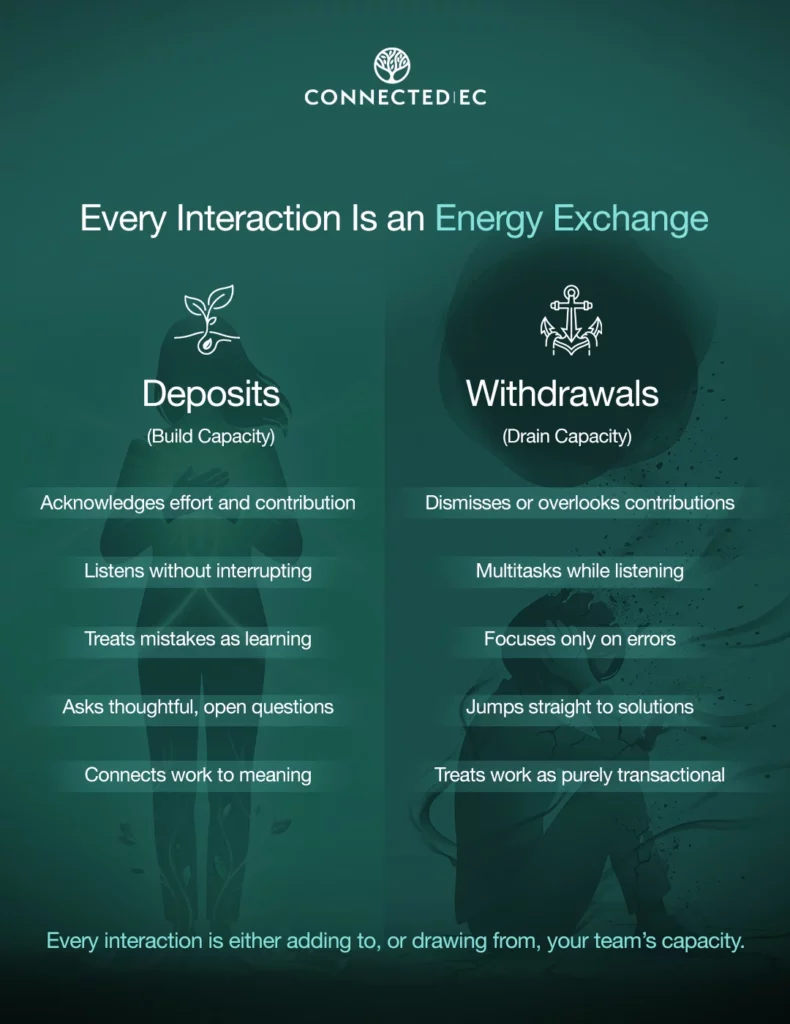
But leaders are constant contributors to that resource pool. Every interaction is either a deposit or a withdrawal. Most leaders just aren’t tracking the balance.
The Energy You Create Becomes the Culture
When leaders consistently generate positive relational energy, engagement rises, and well-being improves. Not as side effects, but as predictable outcomes.
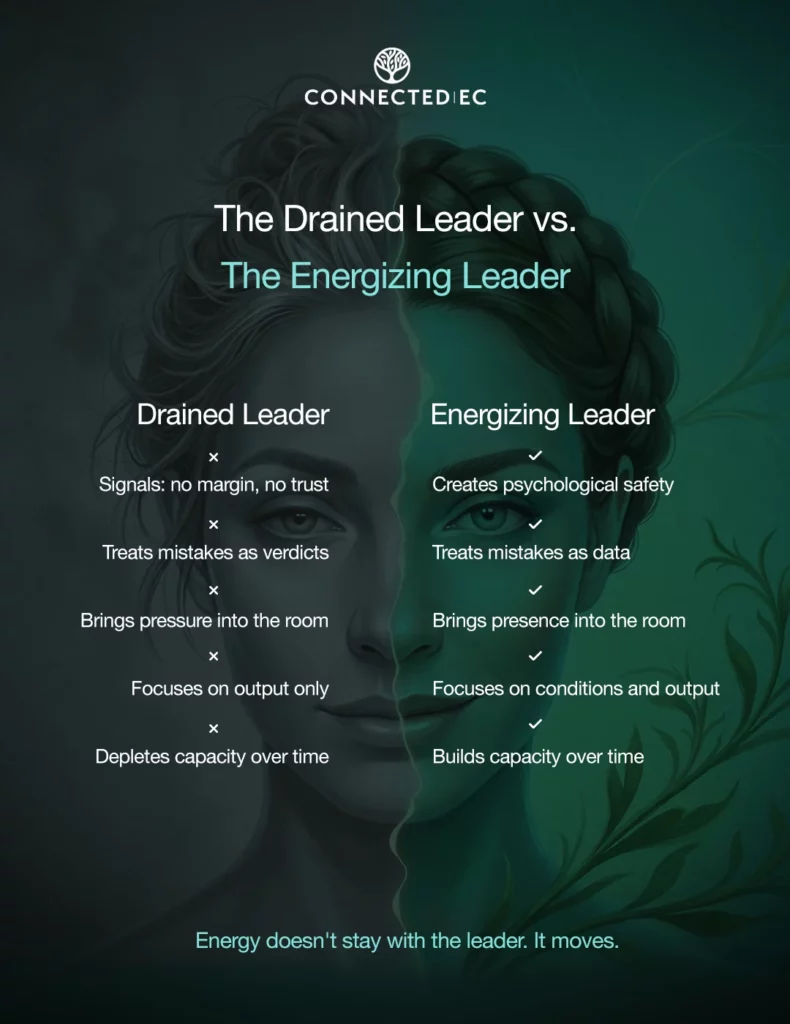
This matters because energy doesn’t stay with the leader. It moves. When a leader brings curiosity, optimism, and genuine presence into their interactions, that becomes the operating standard for the team. When a leader is chronically depleted or emotionally closed off, that spreads too.
What I’ve seen repeatedly in my work with executive teams confirms this: the leaders who consistently show up with presence, optimism, and genuine care don’t just create better cultures, they produce better outcomes. And that distinction matters. This isn’t about being warm or likable. It’s a distinct, measurable leadership capability, and one that can be developed.
Good Intentions Don’t Always Produce Good Energy
Well-intentioned leaders are sometimes the ones who get this wrong. They’re always available, always solving, always pushing.
But being perpetually in firefighting mode sends a signal to the team: there’s no margin here, no trust, no room to think.
Busyness gets mistaken for effectiveness by the leader and eventually by the culture.
Others invest heavily in strategy, feedback systems, and performance processes, and neglect the relational texture of daily interactions entirely. The quick dismissal in a meeting. The absent acknowledgment after a hard week. The lack of genuine curiosity about how someone is actually doing.
These aren’t dramatic leadership failures. They’re quiet, cumulative withdrawals. And over time, they compound in ways that no performance framework will ever capture.
A Simpler Way to Lead: Think in Energy, Not Tasks
What works better isn’t a new system or more time on your calendar. It’s a shift in how you think about your role.
Every interaction is either adding to or drawing from the energy your team has available. That’s the mental model. Simple, but clarifying.
I’ve seen small behaviors create outsized impact. Such behaviors are naming someone’s contribution clearly, asking how they’re actually doing, and staying long enough to hear the real answer, treating a mistake as data rather than a verdict.
Individually, these moments seem minor. But collectively, they shape the conditions people are working in.
And none of these are complicated. But they require intention. And that intention signals something to your team that strategy alone never can: that their capacity matters to you, not just their output.
Try This Before Your Next Meeting
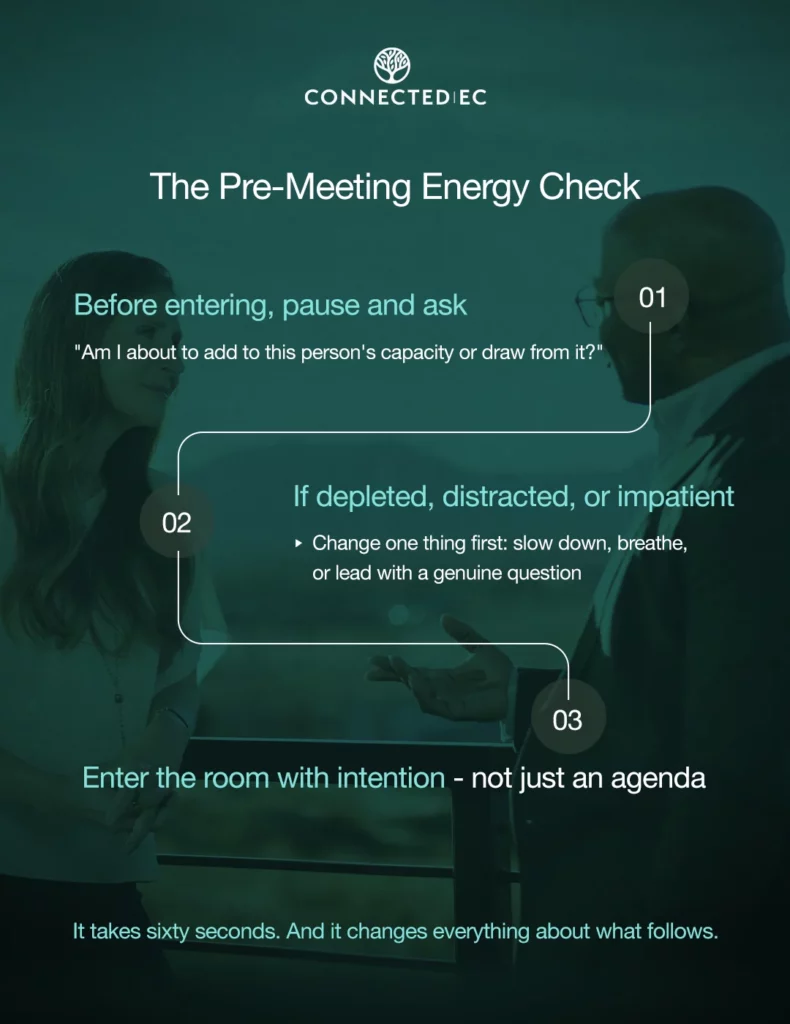
Before your next one-on-one or team meeting, pause and ask yourself one question: Am I about to add to this person’s capacity, or draw from it?
If you’re entering the room depleted, distracted, or impatient, change one thing first. Slow down. Take a breath. Lead with a genuine question before the agenda.
It takes sixty seconds. And it changes everything about what follows.
Leadership isn’t just expressed in what you say or decide. It’s felt in the condition you create for others to think, contribute, and perform.
When you start paying attention to energy, you start to see the real leverage points in your leadership. Not in bigger moves, but in the small, repeated interactions that either expand or constrain the people around you.
Your energy isn’t separate from your leadership. It’s what makes performance possible.